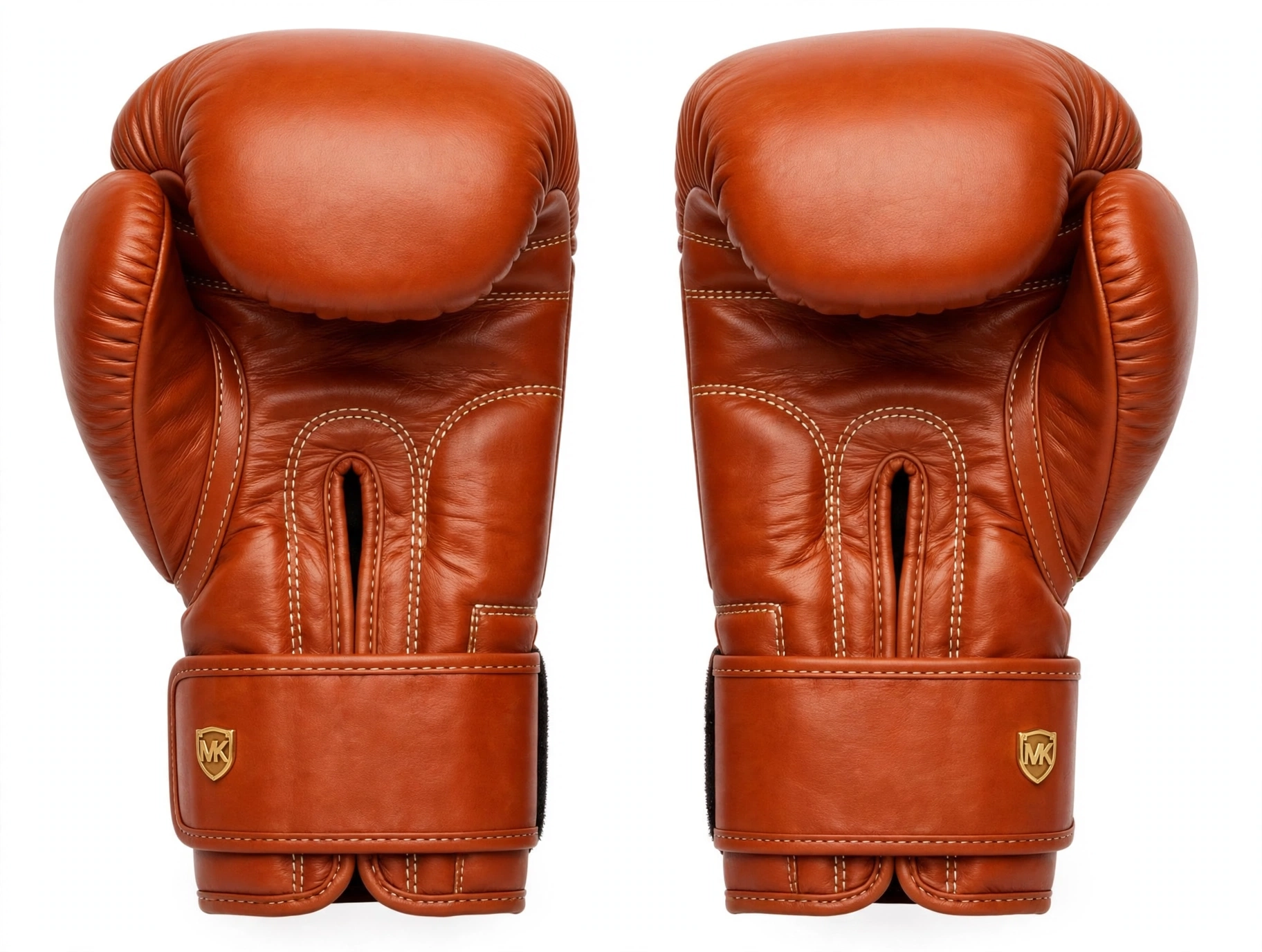
A boxing glove looks simple: leather outside, padding inside, a strap to hold it on. But a good glove is a precise piece of equipment, and the difference between a good glove and a bad one is felt in the first round. If you are ordering boxing gloves, MMA gloves or punching bags for your brand, gym or store, here is what actually matters — and what to ask your manufacturer.
The outside of a boxing glove takes the impact, the sweat and the friction, so the leather matters more here than in almost any other product. A good boxing glove uses full-grain or top-grain leather: strong, flexible, and able to take repeated impact without cracking or peeling.
Cheap gloves use synthetic leather or thin, low-grade hides. They feel stiff, they crack at the seams, and they wear out fast. A real leather glove feels different from the first time you put it on — softer, heavier, and more solid — and it lasts many times longer. Our boxing gloves are hand-cut and hand-stitched from full-grain leather, and the Boxing Gloves in Rust show the quality of the shell and the stitching.
When you order, ask what leather the glove is made from. If the supplier cannot tell you the grade, that is your answer.
A boxing glove is stitched under tension, and the stitching is what holds it together through thousands of punches. Look for double-stitched seams, reinforced stitching around the thumb and cuff, and clean, even stitching with no loose threads. Hand-stitched seams are stronger than they look, because a skilled stitcher can pull each stitch to the right tension — something a fast machine line cannot do as well.
The thumb is the most important detail. In a good glove the thumb is attached and positioned so it cannot catch or bend the wrong way. Check the thumb attachment on a sample before you order in bulk.
A glove must fit snugly. Too loose and the hand moves inside the glove, which is uncomfortable and unsafe. Too tight and the hand goes numb. Gloves are sized by weight, and the size range you order should match your customers — a gym needs a full range, a brand selling to one audience can order narrower.
The closure matters too. A wide hook-and-loop strap is the standard for training gloves because it is fast to put on and take off and holds firmly. Lace-up gloves suit competition and sparring, where a coach or cornerman tightens them. Tell us which closure your customers need when you order.
Boxing gloves are only part of combat gear. MMA gloves are smaller, with open fingers for grappling, and they need the same leather quality and the same careful stitching in a much smaller product. Punching bags are the opposite — large, heavy, and built to take years of daily impact — so the leather, the seams and the hanging straps all have to be strong.
Our leather footballs are made in the same workshop, with the same hand stitching. If your brand sells sports goods, ordering gloves, bags and balls together from one manufacturer keeps your quality and your branding consistent.
Order a sample first. Put the glove on, hit a bag, and check the fit, the leather and the stitching with your own hands — that is the only real test. Samples are ready in 4–5 working days. The minimum order is 50 pieces per style and colour, bulk takes 2–4 weeks, delivery by DHL Express or FedEx takes 4–7 days, and payment is by bank transfer (T/T) or letter of credit (L/C). We offer full OEM branding, so the gloves carry your logo, your colours and your labels.
Any colour, any pattern — we can make it according to your sample.
Ready to order? Enquire now or send your glove styles and quantities through our request a quotation form and we will start with a sample.


